
Carter P76110 Filter-Mounted Lift Pump Kit | 2003–2004.5 Dodge Ram 5.9L Cummins
Description
Restore the original fuel-supply configuration on your 2003–2004.5 Dodge Ram 5.9L Cummins with the Carter P76110 filter-mounted replacement lift pump kit.
Early third-generation Cummins trucks used an electric fuel-transfer pump mounted directly to the engine-mounted fuel-filter housing. Mopar and Cummins later discontinued the original replacement pump, often leaving owners with the more involved and expensive option of converting the truck to an in-tank pump system.
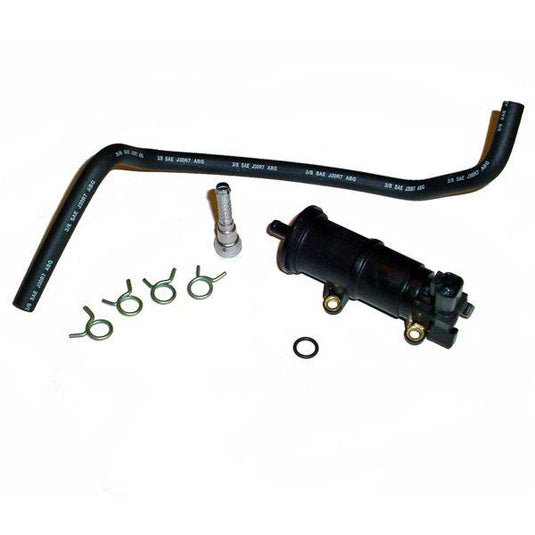
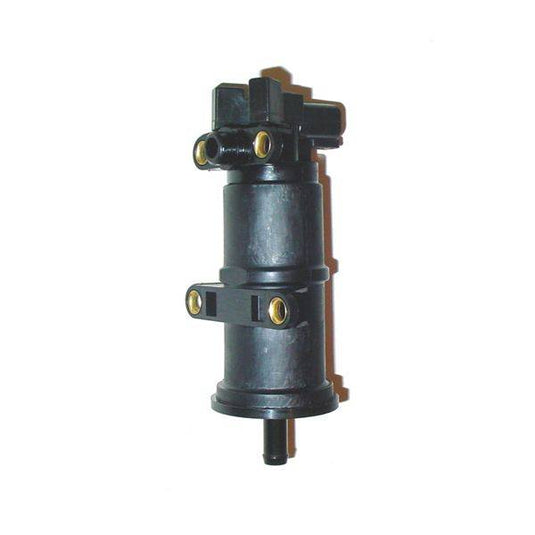
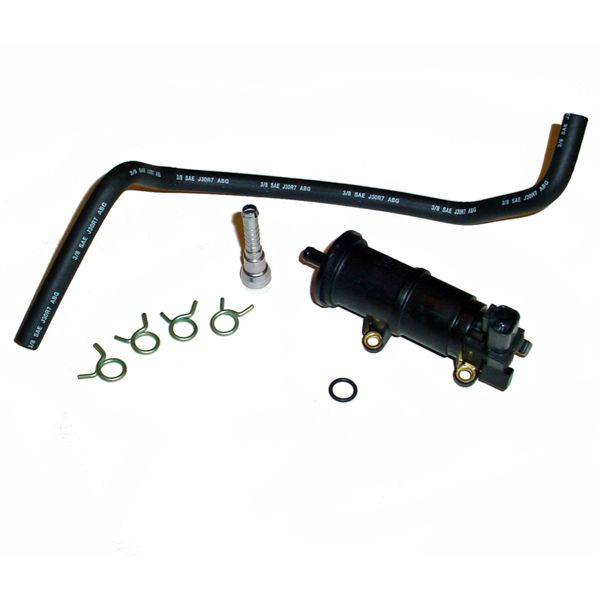
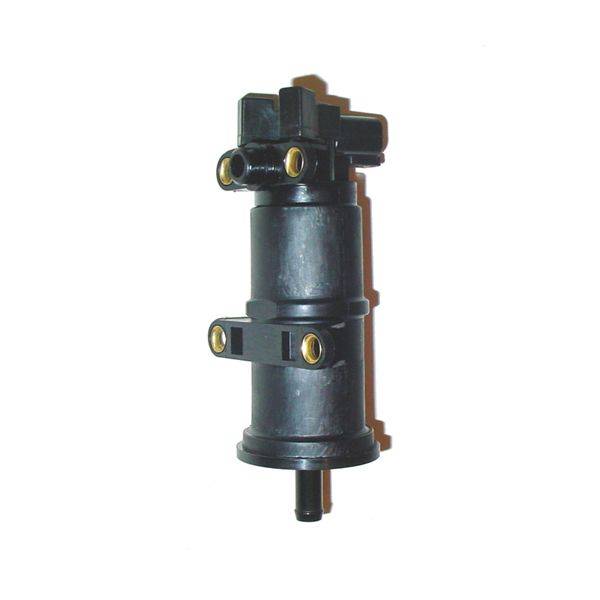
The Carter P76110 provides a direct replacement for the original filter-mounted lift pump, allowing owners to retain the truck’s factory-style fuel-system layout without performing a complete in-tank conversion. The kit includes the lift pump, sealing O-ring, molded fuel hose, hard-line quick-connect coupler, and installation clamps.
This replacement is intended for stock-style applications where the original pump has become weak, intermittent, noisy, leaking, or completely inoperative.
Features
- Fits 2003–2004.5 Dodge Ram 5.9L Cummins applications
- Replaces the original filter-mounted electric lift pump
- Carter part number P76110
- Direct replacement for the factory-style pump arrangement
- Allows the original filter-housing configuration to be retained
- Avoids the need for a complete in-tank pump conversion
- Includes the required molded fuel hose and connection hardware
- Electric operation with factory-style mounting
- Appropriate for stock and lightly modified trucks
- Complete service kit for replacing a weak or failed original pump
What Is Included?
The Carter P76110 replacement kit includes:
- Electric lift pump
- Lift-pump sealing O-ring
- Molded fuel hose
- Quick-connect hard-line coupler
- Installation clamps
The included connection components are important because the original hoses, seals, and couplers may already be hardened, damaged, or difficult to reuse after years of heat exposure.
What Problem Does This Pump Solve?
The filter-mounted lift pump is responsible for moving diesel fuel from the tank, through the supply line, and into the engine-mounted filter housing before the fuel reaches the CP3 high-pressure injection pump.
As the original electric pump ages, its motor and internal pumping components can lose efficiency. The pump may still run and make noise while failing to deliver adequate fuel volume during acceleration or sustained engine load.
A weak or failed pump may contribute to:
- Extended cranking
- Hard starting
- Hesitation during acceleration
- Reduced power under load
- Inconsistent fuel supply
- Intermittent stalling
- Excessive pump noise
- Failure to prime the fuel-filter housing
- Complete no-start conditions
Replacing the failed pump restores the original low-pressure fuel-delivery path without changing the remainder of the factory fuel system.
Why the Lift Pump Matters
The CP3 injection pump creates the high fuel pressure required by the common-rail injection system, but fuel must first reach the CP3 through the low-pressure supply circuit.
The lift pump must move fuel through several components before it reaches the high-pressure pump:
- Fuel-tank pickup
- Supply line
- Filter-mounted electric pump
- Fuel-filter housing
- Outlet plumbing
- CP3 inlet
A restriction or failure anywhere in this path can reduce the fuel available to the CP3.
A truck may appear to operate normally at idle while experiencing supply problems during:
- Heavy acceleration
- Higher engine speed
- Sustained towing
- Steep grades
- High engine load
- Operation with a restricted fuel filter
This is why hearing the pump run does not confirm that it is delivering sufficient fuel.
Why Retain the Original Filter-Mounted Design?
The original 2003–2004.5 fuel system uses a compact electric pump mounted to the fuel-filter housing.
For trucks that remain close to the factory fuel configuration, retaining this arrangement offers several advantages:
- Maintains the original fuel-system layout
- Avoids removing the fuel tank
- Avoids installing an in-tank conversion module
- Requires fewer system modifications
- Uses the existing factory wiring and filter housing
- Provides a straightforward service solution
- Simplifies troubleshooting for an otherwise original truck
An in-tank conversion may still be appropriate for certain applications, but it is not always necessary when the goal is simply to replace a failed original pump.
Glacier Tech Tip
Do not replace the lift pump without checking the fuel filter.
A restricted fuel filter increases the workload placed on the transfer pump and can create symptoms that resemble pump failure. Installing a new pump while leaving a heavily restricted filter in place may result in poor performance or shortened service life.
When the pump’s maintenance history is unknown, inspect or replace the fuel filter at the same time.
Also inspect:
- Fuel-filter housing seals
- Water-in-fuel sensor area
- Drain valve
- Supply hose
- Quick-connect fittings
- CP3 inlet plumbing
- Electrical connector
- Pump power and ground
The fuel system should be treated as a complete circuit rather than diagnosing the pump in isolation.
Filter-Mounted Pump vs. In-Tank Conversion
Carter P76110 Filter-Mounted Replacement
The Carter P76110 replaces the original pump at the fuel-filter housing and retains the factory-style system.
It is generally best suited for:
- Stock trucks
- Daily drivers
- Restorations
- Work trucks
- Owners wanting minimal modification
- Trucks with an otherwise functional factory fuel system
In-Tank Pump Conversion
An in-tank conversion relocates the electric pump into the fuel tank. This requires additional components and a more involved installation.
An in-tank conversion may make sense when:
- The original filter-mounted arrangement has already been removed
- The fuel tank is already being serviced
- The truck owner prefers the later factory configuration
- Additional system changes are planned
- The existing fuel module or plumbing requires replacement
The Carter kit gives owners another option when a complete conversion is unnecessary.
How to Diagnose a Weak Filter-Mounted Lift Pump
A complete diagnosis should evaluate both electrical supply and actual fuel delivery.
Listen for Pump Operation
The pump should run when commanded by the truck’s electrical system. A completely silent pump may indicate:
- Failed pump motor
- Open circuit
- Damaged connector
- Wiring fault
- Poor ground
- Control-system issue
However, noise alone does not prove that the pump is healthy.
Check Pump Voltage
Measure voltage at the pump while it is commanded to operate.
Low voltage can reduce pump speed and fuel output. Possible causes include:
- Corroded terminals
- High-resistance wiring
- Loose connections
- Weak ground
- Damaged harness
- Battery-voltage problems
Inspect Fuel Delivery
Confirm that the pump can move fuel through the filter housing without excessive air, noise, or restriction.
Check the Fuel Filter
A plugged filter may cause low supply volume even when the pump is operating correctly.
Inspect for Air Intrusion
Loose fittings or deteriorated seals can allow air into the supply circuit. Air intrusion may cause difficult starting or erratic operation without producing a visible external fuel leak.
Common Lift-Pump Failure Symptoms
Long Cranking Before Startup
The filter housing may be losing prime, the pump may be weak, or air may be entering the fuel system.
Loss of Power Under Load
The pump may provide enough fuel for idle but fail to maintain delivery when engine demand increases.
Loud or Changing Pump Noise
An unusually loud pump may be working against a restriction or experiencing internal wear.
Intermittent Starting Problems
Electrical connection problems or an intermittent pump motor can create unpredictable operation.
No Fuel During Priming
Check pump operation, electrical power, fuel level, supply restrictions, and the tank pickup.
Fuel Leakage Near the Pump
Inspect the pump O-ring, molded hose, coupler, clamps, filter-housing connections, and surrounding seals.
Fuel System Tech Tip
When installing the replacement pump, prefill or properly prime the fuel-filter housing according to the appropriate service procedure.
Avoid excessive dry cranking. A fuel system containing a large amount of trapped air may require repeated controlled priming cycles before the engine starts and runs smoothly.
After startup:
- Let the engine idle
- Inspect the pump and hose connections
- Look for fuel seepage
- Check for air bubbles where testing allows
- Verify the engine responds normally
- Reinspect the system after a short road test
A dry connection during the first inspection should be checked again after the system reaches normal operating temperature.
Installation Overview
Before beginning installation:
- Disconnect both batteries
- Clean the area around the filter housing
- Drain or contain fuel as needed
- Prevent dirt from entering open fittings
- Inspect the electrical connector
- Compare the new and original pumps
- Confirm hose and coupler routing
- Lubricate the new O-ring with clean diesel fuel where appropriate
During installation:
- Install the new pump without damaging the O-ring
- Position the molded hose without twisting or kinking it
- Fully seat the quick-connect coupler
- Secure the supplied clamps
- Route the hose away from abrasion and excessive heat
- Reconnect the electrical connector
- Prime the system
- Inspect for leakage
Do not overtighten clamps or fittings. Excessive force can damage the molded hose, coupler, filter housing, or sealing surfaces.
Applications and Fitment
Designed for:
- 2003 Dodge Ram 2500 5.9L Cummins
- 2003 Dodge Ram 3500 5.9L Cummins
- 2004 Dodge Ram 2500 5.9L Cummins
- 2004 Dodge Ram 3500 5.9L Cummins
- Applicable early-2004.5 trucks equipped with the original filter-mounted lift pump
Fitment should be confirmed by inspecting the existing fuel system before ordering.
The correct application will have an electric transfer pump mounted at the engine fuel-filter housing. Trucks that have already been converted to an in-tank or aftermarket lift-pump system will require different components.
Important Model-Year Note
The 2004 model year can create confusion because fuel-system configurations changed during the production period.
Do not rely solely on the model year printed on the registration.
Before ordering, physically verify:
- Where the current lift pump is mounted
- The design of the fuel-filter housing
- The electrical connector
- The fuel-hose arrangement
- Whether the truck has already received an in-tank conversion
- Whether an aftermarket fuel system has been installed
This kit is specifically intended for trucks retaining the original filter-mounted pump configuration.
Is This the Correct Pump for Your Truck?
This is likely the correct replacement when:
- The truck is a 2003–2004.5 5.9L Cummins
- The electric pump is mounted to the fuel-filter housing
- The original pump is weak, leaking, intermittent, or failed
- The truck retains the factory-style supply system
- You want to avoid an in-tank conversion
- You need the pump, hose, coupler, clamps, and O-ring together
This is not the correct solution when:
- The truck has an in-tank lift pump
- The truck already uses a frame-mounted aftermarket pump
- The filter-mounted pump has been deleted
- The fuel system has been converted to a Fuel Boss
- The actual problem is a wiring fault or restricted filter
- The truck’s fuel demand exceeds the capability of the stock-style system
Important Notes
- Carter part number: P76110
- Fits the original filter-mounted configuration
- Not an in-tank fuel-pump conversion
- Not a complete aftermarket high-flow fuel system
- Verify the pump location before ordering
- Replace the fuel filter when its condition is unknown
- Inspect power, ground, wiring, and connector condition
- Prime the system before extended engine cranking
- Check every connection for leakage after installation
- The product is presently listed as a preorder item on the Glacier Diesel Power website.
Common Failure Point: Replacing the Pump Without Finding the Cause
A failed lift pump may be the result of age and normal wear, but it can also be damaged by another problem in the fuel system.
Possible contributing causes include:
- Plugged fuel filter
- Contaminated diesel fuel
- Water in the fuel
- Restricted tank pickup
- Collapsing supply hose
- Low operating voltage
- Poor electrical ground
- Loose electrical connection
- Air entering the supply circuit
Installing a new pump without correcting the underlying problem may lead to continued drivability concerns or premature pump failure.
Complete Your 5.9L Cummins Fuel System
Pair the Carter P76110 replacement pump with the appropriate Glacier Diesel Power maintenance and diagnostic components:
- Replacement fuel filter
- Fuel-filter housing seals
- Fuel-pressure test fitting
- Fuel-pressure gauge components
- CP3 inlet fittings
- High-flow fuel tank pickup
- Fuel supply hose and adapters
- Water-separator components
- Fuel Boss mechanical lift-pump system
- Fuel Boss base kit
The Carter P76110 Filter-Mounted Lift Pump Kit provides a direct replacement solution for early third-generation 5.9L Cummins trucks that still use the original engine-mounted fuel-transfer pump. It allows owners to restore the factory-style fuel system without automatically committing to a complete in-tank conversion.
Carter P76110 Filter-Mounted Lift Pump Kit | 2003–2004.5 Dodge Ram 5.9L Cummins
Description
Restore the original fuel-supply configuration on your 2003–2004.5 Dodge Ram 5.9L Cummins with the Carter P76110 filter-mounted replacement lift pump kit.
Early third-generation Cummins trucks used an electric fuel-transfer pump mounted directly to the engine-mounted fuel-filter housing. Mopar and Cummins later discontinued the original replacement pump, often leaving owners with the more involved and expensive option of converting the truck to an in-tank pump system.
The Carter P76110 provides a direct replacement for the original filter-mounted lift pump, allowing owners to retain the truck’s factory-style fuel-system layout without performing a complete in-tank conversion. The kit includes the lift pump, sealing O-ring, molded fuel hose, hard-line quick-connect coupler, and installation clamps.
This replacement is intended for stock-style applications where the original pump has become weak, intermittent, noisy, leaking, or completely inoperative.
Features
- Fits 2003–2004.5 Dodge Ram 5.9L Cummins applications
- Replaces the original filter-mounted electric lift pump
- Carter part number P76110
- Direct replacement for the factory-style pump arrangement
- Allows the original filter-housing configuration to be retained
- Avoids the need for a complete in-tank pump conversion
- Includes the required molded fuel hose and connection hardware
- Electric operation with factory-style mounting
- Appropriate for stock and lightly modified trucks
- Complete service kit for replacing a weak or failed original pump
What Is Included?
The Carter P76110 replacement kit includes:
- Electric lift pump
- Lift-pump sealing O-ring
- Molded fuel hose
- Quick-connect hard-line coupler
- Installation clamps
The included connection components are important because the original hoses, seals, and couplers may already be hardened, damaged, or difficult to reuse after years of heat exposure.
What Problem Does This Pump Solve?
The filter-mounted lift pump is responsible for moving diesel fuel from the tank, through the supply line, and into the engine-mounted filter housing before the fuel reaches the CP3 high-pressure injection pump.
As the original electric pump ages, its motor and internal pumping components can lose efficiency. The pump may still run and make noise while failing to deliver adequate fuel volume during acceleration or sustained engine load.
A weak or failed pump may contribute to:
- Extended cranking
- Hard starting
- Hesitation during acceleration
- Reduced power under load
- Inconsistent fuel supply
- Intermittent stalling
- Excessive pump noise
- Failure to prime the fuel-filter housing
- Complete no-start conditions
Replacing the failed pump restores the original low-pressure fuel-delivery path without changing the remainder of the factory fuel system.
Why the Lift Pump Matters
The CP3 injection pump creates the high fuel pressure required by the common-rail injection system, but fuel must first reach the CP3 through the low-pressure supply circuit.
The lift pump must move fuel through several components before it reaches the high-pressure pump:
- Fuel-tank pickup
- Supply line
- Filter-mounted electric pump
- Fuel-filter housing
- Outlet plumbing
- CP3 inlet
A restriction or failure anywhere in this path can reduce the fuel available to the CP3.
A truck may appear to operate normally at idle while experiencing supply problems during:
- Heavy acceleration
- Higher engine speed
- Sustained towing
- Steep grades
- High engine load
- Operation with a restricted fuel filter
This is why hearing the pump run does not confirm that it is delivering sufficient fuel.
Why Retain the Original Filter-Mounted Design?
The original 2003–2004.5 fuel system uses a compact electric pump mounted to the fuel-filter housing.
For trucks that remain close to the factory fuel configuration, retaining this arrangement offers several advantages:
- Maintains the original fuel-system layout
- Avoids removing the fuel tank
- Avoids installing an in-tank conversion module
- Requires fewer system modifications
- Uses the existing factory wiring and filter housing
- Provides a straightforward service solution
- Simplifies troubleshooting for an otherwise original truck
An in-tank conversion may still be appropriate for certain applications, but it is not always necessary when the goal is simply to replace a failed original pump.
Glacier Tech Tip
Do not replace the lift pump without checking the fuel filter.
A restricted fuel filter increases the workload placed on the transfer pump and can create symptoms that resemble pump failure. Installing a new pump while leaving a heavily restricted filter in place may result in poor performance or shortened service life.
When the pump’s maintenance history is unknown, inspect or replace the fuel filter at the same time.
Also inspect:
- Fuel-filter housing seals
- Water-in-fuel sensor area
- Drain valve
- Supply hose
- Quick-connect fittings
- CP3 inlet plumbing
- Electrical connector
- Pump power and ground
The fuel system should be treated as a complete circuit rather than diagnosing the pump in isolation.
Filter-Mounted Pump vs. In-Tank Conversion
Carter P76110 Filter-Mounted Replacement
The Carter P76110 replaces the original pump at the fuel-filter housing and retains the factory-style system.
It is generally best suited for:
- Stock trucks
- Daily drivers
- Restorations
- Work trucks
- Owners wanting minimal modification
- Trucks with an otherwise functional factory fuel system
In-Tank Pump Conversion
An in-tank conversion relocates the electric pump into the fuel tank. This requires additional components and a more involved installation.
An in-tank conversion may make sense when:
- The original filter-mounted arrangement has already been removed
- The fuel tank is already being serviced
- The truck owner prefers the later factory configuration
- Additional system changes are planned
- The existing fuel module or plumbing requires replacement
The Carter kit gives owners another option when a complete conversion is unnecessary.
How to Diagnose a Weak Filter-Mounted Lift Pump
A complete diagnosis should evaluate both electrical supply and actual fuel delivery.
Listen for Pump Operation
The pump should run when commanded by the truck’s electrical system. A completely silent pump may indicate:
- Failed pump motor
- Open circuit
- Damaged connector
- Wiring fault
- Poor ground
- Control-system issue
However, noise alone does not prove that the pump is healthy.
Check Pump Voltage
Measure voltage at the pump while it is commanded to operate.
Low voltage can reduce pump speed and fuel output. Possible causes include:
- Corroded terminals
- High-resistance wiring
- Loose connections
- Weak ground
- Damaged harness
- Battery-voltage problems
Inspect Fuel Delivery
Confirm that the pump can move fuel through the filter housing without excessive air, noise, or restriction.
Check the Fuel Filter
A plugged filter may cause low supply volume even when the pump is operating correctly.
Inspect for Air Intrusion
Loose fittings or deteriorated seals can allow air into the supply circuit. Air intrusion may cause difficult starting or erratic operation without producing a visible external fuel leak.
Common Lift-Pump Failure Symptoms
Long Cranking Before Startup
The filter housing may be losing prime, the pump may be weak, or air may be entering the fuel system.
Loss of Power Under Load
The pump may provide enough fuel for idle but fail to maintain delivery when engine demand increases.
Loud or Changing Pump Noise
An unusually loud pump may be working against a restriction or experiencing internal wear.
Intermittent Starting Problems
Electrical connection problems or an intermittent pump motor can create unpredictable operation.
No Fuel During Priming
Check pump operation, electrical power, fuel level, supply restrictions, and the tank pickup.
Fuel Leakage Near the Pump
Inspect the pump O-ring, molded hose, coupler, clamps, filter-housing connections, and surrounding seals.
Fuel System Tech Tip
When installing the replacement pump, prefill or properly prime the fuel-filter housing according to the appropriate service procedure.
Avoid excessive dry cranking. A fuel system containing a large amount of trapped air may require repeated controlled priming cycles before the engine starts and runs smoothly.
After startup:
- Let the engine idle
- Inspect the pump and hose connections
- Look for fuel seepage
- Check for air bubbles where testing allows
- Verify the engine responds normally
- Reinspect the system after a short road test
A dry connection during the first inspection should be checked again after the system reaches normal operating temperature.
Installation Overview
Before beginning installation:
- Disconnect both batteries
- Clean the area around the filter housing
- Drain or contain fuel as needed
- Prevent dirt from entering open fittings
- Inspect the electrical connector
- Compare the new and original pumps
- Confirm hose and coupler routing
- Lubricate the new O-ring with clean diesel fuel where appropriate
During installation:
- Install the new pump without damaging the O-ring
- Position the molded hose without twisting or kinking it
- Fully seat the quick-connect coupler
- Secure the supplied clamps
- Route the hose away from abrasion and excessive heat
- Reconnect the electrical connector
- Prime the system
- Inspect for leakage
Do not overtighten clamps or fittings. Excessive force can damage the molded hose, coupler, filter housing, or sealing surfaces.
Applications and Fitment
Designed for:
- 2003 Dodge Ram 2500 5.9L Cummins
- 2003 Dodge Ram 3500 5.9L Cummins
- 2004 Dodge Ram 2500 5.9L Cummins
- 2004 Dodge Ram 3500 5.9L Cummins
- Applicable early-2004.5 trucks equipped with the original filter-mounted lift pump
Fitment should be confirmed by inspecting the existing fuel system before ordering.
The correct application will have an electric transfer pump mounted at the engine fuel-filter housing. Trucks that have already been converted to an in-tank or aftermarket lift-pump system will require different components.
Important Model-Year Note
The 2004 model year can create confusion because fuel-system configurations changed during the production period.
Do not rely solely on the model year printed on the registration.
Before ordering, physically verify:
- Where the current lift pump is mounted
- The design of the fuel-filter housing
- The electrical connector
- The fuel-hose arrangement
- Whether the truck has already received an in-tank conversion
- Whether an aftermarket fuel system has been installed
This kit is specifically intended for trucks retaining the original filter-mounted pump configuration.
Is This the Correct Pump for Your Truck?
This is likely the correct replacement when:
- The truck is a 2003–2004.5 5.9L Cummins
- The electric pump is mounted to the fuel-filter housing
- The original pump is weak, leaking, intermittent, or failed
- The truck retains the factory-style supply system
- You want to avoid an in-tank conversion
- You need the pump, hose, coupler, clamps, and O-ring together
This is not the correct solution when:
- The truck has an in-tank lift pump
- The truck already uses a frame-mounted aftermarket pump
- The filter-mounted pump has been deleted
- The fuel system has been converted to a Fuel Boss
- The actual problem is a wiring fault or restricted filter
- The truck’s fuel demand exceeds the capability of the stock-style system
Important Notes
- Carter part number: P76110
- Fits the original filter-mounted configuration
- Not an in-tank fuel-pump conversion
- Not a complete aftermarket high-flow fuel system
- Verify the pump location before ordering
- Replace the fuel filter when its condition is unknown
- Inspect power, ground, wiring, and connector condition
- Prime the system before extended engine cranking
- Check every connection for leakage after installation
- The product is presently listed as a preorder item on the Glacier Diesel Power website.
Common Failure Point: Replacing the Pump Without Finding the Cause
A failed lift pump may be the result of age and normal wear, but it can also be damaged by another problem in the fuel system.
Possible contributing causes include:
- Plugged fuel filter
- Contaminated diesel fuel
- Water in the fuel
- Restricted tank pickup
- Collapsing supply hose
- Low operating voltage
- Poor electrical ground
- Loose electrical connection
- Air entering the supply circuit
Installing a new pump without correcting the underlying problem may lead to continued drivability concerns or premature pump failure.
Complete Your 5.9L Cummins Fuel System
Pair the Carter P76110 replacement pump with the appropriate Glacier Diesel Power maintenance and diagnostic components:
- Replacement fuel filter
- Fuel-filter housing seals
- Fuel-pressure test fitting
- Fuel-pressure gauge components
- CP3 inlet fittings
- High-flow fuel tank pickup
- Fuel supply hose and adapters
- Water-separator components
- Fuel Boss mechanical lift-pump system
- Fuel Boss base kit
The Carter P76110 Filter-Mounted Lift Pump Kit provides a direct replacement solution for early third-generation 5.9L Cummins trucks that still use the original engine-mounted fuel-transfer pump. It allows owners to restore the factory-style fuel system without automatically committing to a complete in-tank conversion.